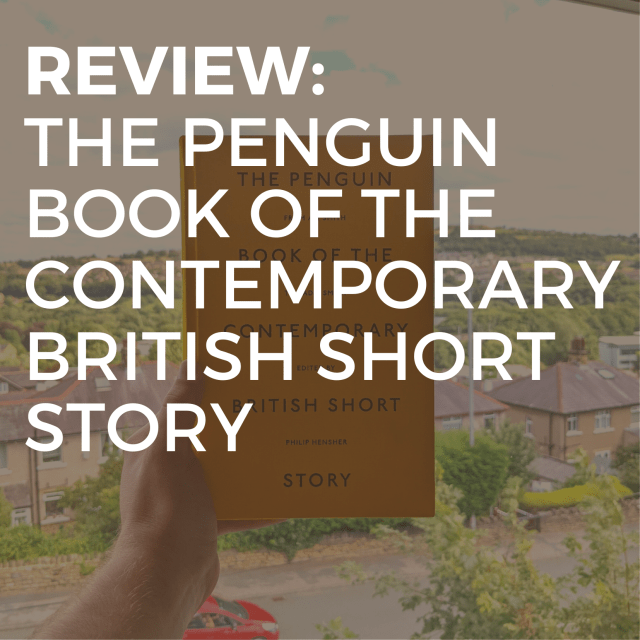
When I set out with this, I intended to read a short story every day… buuut best laid plans, and all that. I was reading Sapiens by Yuval Noah Harari at the same time, and knew I’d need a fiction-fix to help me great through ~500 pages of non-fiction. At the same time, I was trying to do more short story reading because I wanted to write more short stories. So it seemed like the perfect place to start.
I’ve collected my thoughts (hopefully without too many “spoilers”) below, because I wanted to keep a log (much like I do on Instagram) of all the different stories and how they made me feel after I’d read them and given myself (sometimes a little too much) time to reflect.
AL Kennedy: Spared
The first story in the collection. I’m not sure what I expected. Having sat on it for a couple of hours, I’ve found that I enjoyed it more on reflection than I did in the moment. I particularly enjoyed the voice of Greg, the protagonist, who meets Amanda in line for a cheese stop shortly before Christmas (where he reveals he doesn’t particularly like cheese, or shopping).
The difference between his internal voice and the person he presents to the world was immediately compelling. Kennedy weaves in just enough uncomfortable truth for it to be convincing and unnerving, a really human touch I found uncomfortable to think about afterwards.
While I think the beginning of the story is where it’s strongest, I enjoyed the gentle descent toward the conclusion – subtly satisfying.
Tessa Hadley: Funny Little Snake
This one got me. A story, for me, about the outsiders (Robyn and Valerie) on the periphery of a power struggle between a husband (Gil) and his ex-wife (Marise).
There’s a melancholy that seeps through every moment of this story, and even though the writing is full and descriptive and colourful, it’s also overwrought and emotive in a way that reflects perfectly the performance each and all of the characters are playing.
This story, with its long lead-in comes to a quick, whipping end that left me as sad, uncertain and scared as Robyn, our funny little snake, must feel.
Kazuo Ishiguro: Come Rain or Come Shine
God, all these stories are so sad. I think, like the others so far, this is my first outing with this author. I wasn’t sure what to expect. This story went through phases: from carefully curated, rosy nostalgia to panicked, manic farce, to sad, spent intimacy between old friends.
There’s probably some critical theory or poignancy that makes this story a key pick for Hensher’s collection, but I couldn’t really see it. I know from reading other people’s reviews that they found poignant messaging buried beneath fairly boring prose about life carrying you away, being happy with what you have, and living in the moment. There’s certainly tragedy in the curdling of this trio’s friendship and the caricatures they’ve built of one another in their heads, but only Ray seemed to be genuinely invested, if not slightly bitter he missed his own chance to be someone else.
The back-and-forth phone calls are interesting devices and the speed of the dialogue helps pace this story, especially into the mania of the middle act with Charlie and Ray’s (ridiculous) plan to cover an innocent mistake, but otherwise I was grasping for, and desperately hoping, for a genuine moment between these characters. A story I was relieved to finish.
Jackie Kay: Physics and Chemistry
It took me a few days to actually dedicate time to this, but god I’m glad I did. The first story in this collection to explore a LGBT+ relationship. It’s a short story, lots of set up and context and peeks into the lives of these two women: the quiet, stoic and serious Physics, and the more adventurous, forward Chemistry.
But this is the first story that made me happy from the collection so far. The life-changing conclusion is wonderful and life-affirming and defiant.
Beautiful.
Graham Swift: Remember This
Well that run of happy short stories was short lived! I’d hoped the tone of the collection was about to shift, and for a while Swift’s story was hopeful – a story that focuses on a young couple, just married, going to write their wills and the day they have afterwards.
A memorable part of this is how Swift captures the intensity of someone thinking away excitedly, the frantic chase from emotion to reason. It is a beautiful story, that a new husband so in love and contemplating the love that exists between him and Lisa, his wife, wants to capture everything he’s feeling in his first love letter.
Really, this is a story about the richness of a moment cherished with a partner, perfectly formed and needing very little curation or encouragement from the people involved. A moment they’ll remember forever, both fondly and then maybe later, not so much.
Jane Gardam: Dangers
A curious little story this one. Full of childlike wonder and sensory detail, but quick and indistinct in places a bit like childhood memories. There’s a nice circular device with the iron rod/arrow and arrowroot, but I can’t say this one blew me away.
Really, a sweet story about being a little boy and all the things you imagine out of the mundane and the roles you assume for yourself around other adults.
Ali Smith: The Universal Story
Ahhhhh I absolutely loved this. It was great. I loved the way Smith bounced from person to person, weaving the story first through the eyes of someone looking out from a window to a churchyard, to a shop and then creating the entire narrative through these people’s different viewpoints and snippets of life.
I can almost imagine reading this in a university workshop and using it as a template for a writing exercise. It comes together so well. Properly good this one.
Neil Gaiman: Troll Bridge
Like everyone else in the world, I like Neil Gaiman, and particularly The Sandman and begrudgingly, Neverwhere. He’s a safe pair of hands, isn’t he. That said, I’m not much a fan of magic realism, which is Gaiman’s whole bag.
Troll Bridge is, I guess, a bit of a modern fairy tale for adults. It describes the life of Jack, as he goes from wandering his little village and finding the paths between trees and the hidden places of his little world. We see his life in three parts – as a young boy, a teenager, a man – where at each juncture, he meets the Troll that lives under the bridge. Jack’s a bit of an arse, really, and throughout Gaiman asks you to explore whether he was always this way or whether his encounter transformed him.
It’s an interesting take. But like nearly every story so far, it’s sad. From the off, it sets a pessimistic theme and looks at aging through the lens of losing everything you appreciated while you were young, from innocence and discovery to places, people and things. I know Gaiman is a talented writer, but here, I felt it was a bit telling, abrupt and wasn’t quite as polished as some of the other stories in the collection.
Martin Amis: The Unknown Known
Well, I thought this was kind of a load of shit, to be honest. It’s not even a completed short story. It ends with a note from the author describing how the story developed in a longer unpublished manuscript, and a point that he abandoned the story for a variety of reasons.
So, how did it come to be published in the Penguin Book of the Contemporary British Short Story? A fucking mystery.
Some other people have said it’s because of the satire. But it didn’t feel like satire as much as terror-porn the author realised he didn’t have the stomach for? Hard pass from me.
China Miéville: Entry Taken from a Medical Encyclopaedia
You know, I’m not usually a fan of ‘found’ short stories. I usually find the formats kind of off putting and a distraction from the story itself, because a part of you as a reader has to remain in the present, lucid and able to absorb all the details.
But there’s gold in this one. The little voices coming through in the text itself, the prejudices of the authorial voice and the fun Miéville has with creating this affliction and it’s impact (not only on Buscard but also) on the rest of the world.
It’s all in the little details Miéville tactfully disperses in the text, from the entry itself to the footnotes. There’s a good measure of dry humour here too, which make all of this a really convincing, technically-sound piece of writing. Really enjoyed it.
Peter Hobbs: Winter Luxury Pie
This is a bizarre, but beautifully written story that needs more reflection than I’ve really given it. Hobbs has a lovely, flowing style of writing where each sentence continues to build this monumental story.
In my rush to finish it, there is probably lots I’ve missed. It’s not really as sad as the others I’ve read so far. There’s a sense of missed opportunities and family obligations, and the inexorable approach of the end of an era for the narrator and her family.
There are little hints towards the narrator’s sexuality which were nice, and I think the subversion of the stereotypical farmer by using a (much) expanded vocabulary was a welcome feature here. Two beautiful phrases caught my eye: ‘…everyone’s got shit in their soul’ and ‘Words change everything.’
Couldn’t agree more.
Thomas Morris: All the Boys
This one has knocked me for six. In short, it’s a 3-part short story about a stag do weekend in Dublin. A group of lads in their late 20s stacked with nostalgia and the overbearing doom of finally discovering the passage of time.
At its core, it’s a story about masculinity that hits so many notes. I know this story, I can recognise it in my own experience – though thankfully all the Stag’s I’ve been on haven’t been nearly as toxic and loaded.
There’s some real beauty in the writing of this, the seeming ease that Morris uses to turn a phrase and translate drunken evenings, revelations and those chats that happen in a smoking area sometime after midnight into something coherent.
This story will stay with me for a long time. It’s got it’s hooks in. But another sad story, that takes delight in the depiction of what should be a joyful occasion with the reality that everyone is just playing a part they think their friends want from them.
David Rose: A Nice Bucket
Firmly into the section of the book devoted to stories about men, now. This one didn’t really take me. There’s some interesting craft at work here with the reported dialogue and the blurred lines between speech, narration and exposition.
It felt like a story with too much hanging fruit (no innuendo intended) as it tells the story of a gang of tradies putting speed bumps into residential roads, at their own pace, making tea on the tar burner, working without their shirts on and oggling a beautiful woman (and later another “bucket”).
No, not sure about this one. There’s hopefully more depth to it than I picked up on, but it didn’t grab me the way other stories in the collection have. At least it wasn’t as overtly sad as some of the others, so maybe that’s a win here.
David Szalay: Chapter 2 (from ‘All That Man Is’)
Well I don’t know about you, but I think it’s kind of cheating to use an excerpt from a longer narrative. While it’s from a novel that is meant to be 9 interconnected short stories, there was nothing short about this.
It’s the depressing tale of Bérnard, an early twenties, laconic Frenchman with few ambitions who goes on a week long holiday to Cyprus. Every word felt like a week. And while Szalay can write some really elegant prose, there was little in the narrative itself that recommended it to me.
The second danger of reading an excerpt is that it also discounts me from ever reading the novel, even out of a morbid curiosity. I just didn’t enjoy the pains Szalay took to beat Bérnard down at every turn, subvert any expectations or dreams he had with the harshness of the story’s reality.
Irvine Welsh: Catholic Guilt (You Know You Love It)
I could appreciate this one as I got further in, but I’m not a huge fan. Not sure Irvine Welsh is really my thing. When I was studying writing, nearly every early 20s guy on my course had an obsession with him.
I think because he’s such an influential writer reading his work now for the first time to me feels like a parody. I’m not a huge fan of dialogue outside of speech marks, writing in dialect or fluid punctuation anyway, and that’s a lot of what makes this story what it is, all with a patented violent, disturbed, unreliable narrator.
The last third feels rushed compared to the violent delight of the first 2 thirds of this story. Pacing is a bit off and it was just quite an uncomfortable read. Not my bag, at all.
I’m a bit relieved that this is the last story in the section about ‘Men’ – it started strong and ended a bit overdone and desperate.
Lucy Caldwell: Poison
What an amazing story to open the collection’s section on ‘Women’. It’s a teenage memory of dangerous infatuation with a teacher, fantasy-fuelled, and book ended beautifully with present day reflection.
I think this story is incredibly well crafted, from the small details Caldwell picks out from the heart thumping scene in the bathroom, to the dynamics of school friends as they begin to grow up.
There’s a powerful blending of remembered exhilaration, jealousy, disgust and guilt. It’s horrifyingly plausible, and part of that fear sits with you after you finish reading – that a single lie can demolish so much, even when it’s someone else’s. The voyeurism is a fundamental part that makes you feel complicit, like you’re the fifth girl in the friendship group watching it all unfold.
Rose Tremain: The Closing Door
Quite a sweet, sad story about a mother and daughter as they enter new chapters of their life. Set in the 50s, there was some good details picked out to root the story in the time.
There’s definitely some depth there, as the mother observes the lives of other mothers around her who have been luckier and reflects on the contrast between them and how her life has been devoted to the little girl she’s just said bye to at the station.
I don’t have a lot to say about this one really. It definitely didn’t grab me as much as some of the others I’ve read here. Though so far, this section seems to be defined by the voyuerism of the central, female characters – though in this story, it feels less active and more like the behaviour of someone sidelined from their people and world around them.
Helen Oyeyemi: if a book is locked there’s probably a good reason for that, don’t you think
Ok, I can’t lie. I didn’t get this.
A seemingly mundane story about ‘you’, the second person narrator, and Eva the new girl in the office. Eva has a diary that she kept between 13 and 15, inspired by Anne Frank. You return the diary to Eva later in the story, amid some Tell Tale Heart weirdness that feels completely out of place.
There’s a lot of detail here that I don’t think actually amounts to anything. Can’t say I was that into it and super surprised to see that it’d been nominated for short story awards when it was released. Next?
Leone Ross: The Woman Who Lived in a Restaurant
Well, if I didn’t get the last story, then I had absolutely no chance here.
I don’t even have anything to say about it. Bizarre, fantastical scenario that made no sense to me.
Helen Simpson: Every Third Thought
Another one that didn’t really do anything for me, though it was much better written that the story before. Cancer panic sweeps the school gate mother’s, as everyone seems to be getting ill or dying.
I think there’s something in here about the veneer of age sliding away, or the sudden blooming awareness of realising your own mortality and impermanence.
It seemed a bit of a shame for this to be the final story in section about Women. It’s entirely possible that there was more subtlety or nuance to these stories than I picked up on.
Zadie Smith: Moonlit Landscape with Bridge
Not a lot to say about this. I was intrigued going in but I’m not sure this story went further than allusion and innuendo about the price of power, and the hypocrisy of loving your country and abandoning it when times get tough.
I’d have liked to see more of the Marlboro Man, a central character to this who in his chaotic way adds further depth to a story about – I think – cowardice.
I like the idea, the snapshot of time – a stuttering car drive through a naturally devastated city – but it concluded with a bit of a puff, rather than the drama, tragedy or retribution that seemed more likely.
Will Self: The Rock of Crack as Big as the Ritz
This is another story where I’m not sure I get what recommends it to be a part of this collection. The only real standout for me was the fluidity of names that Danny/Bantu takes on throughout the early portions of the story.
I was a bit uncomfortable throughout with the idea of a white author writing about young Black Londoners dealing drugs. The story was published in 1995, but it kind of smacks of perpetuating stereotypes.
Not for me.
Gerard Woodward: The Fall of Mr and Mrs Nicholson
I thought I was going to like this. A man, summoned to the headquarters of his country is asked to write a speech to calm a growing mob of rioters. But it quickly became a bit absurd, which is somehow a genre that people enjoy?
If there’s one thing I hate after doing a degree in Creative Writing, it’s stories about writers writing, no matter what the circumstances are.
I am on a run of stories I’ve not loved. I don’t even think there was much to the technique here. The writing felt so overbaked and so forcefully bewildered and detached from the actual drama of the situations it was describing. It felt telling and really, I think this was the worst way to tell this story. Not my thing.
James Kelman: justice for one
Absolutely not, no.
This was the final story in the War and Politics section of the collection. I’m so glad it was actually short. What a relief to have this dizzying, completely unreliable nonsense finished.
Lucy Wood: Flotsam, Jetsam, Lagan, Derelict
There was something so beautiful and haunting about this story. The mounting progression of the story, matching the title, was a great mirroring of Mary’s descent into what I took to be dementia or Alzheimer’s.
This section is about Catastrophic World’s and was pretty surreal throughout. There’s something really haunting here, a secret or something being ignored, something festering that just punctuates the entire narrative.
Hilary Mantel: The Clean Slate
Like a lot of the writers in this collection, I’ve never read any Mantel before, so this was a welcome discovery of a story. A quiet, nearly tender, mostly rueful story that gives a brilliance to a mother-daughter relationship as it draws to a hospice conclusion.
There is great craft at work here, the way Mantel uses the narrator’s preference for hard facts and figures to contrast with her mother’s reliance on anecdote and embellishments, each of them selfishly trying to take control or add meaning to their lives through the Family Tree.
A great story (at last – I thought the run of form I’d struck in these pages would never end.)
Eley Williams: Fears and Confessions of an Ortolan Chef
This is quite a visceral story, as you’d expect from anything that describes the ceremony and ritual of eating ortolan bunting. The relationship between the narrator and her disapproving partner is only touched on, delicately, to make space I think for all the gruesome descriptions of the Chef’s work.
The story blends different realities together with great care; from dreams and nightmares, to expectations, to fantasies and reality.
Kind of harrowing, actually.
Sarah Hall: Later, His Ghost
This is a story I wish I’d discovered at uni. It’s incredible, and the first that’s met my expectations for this part of the collection. A beautifully written and layered story, that builds and builds until that final line, bending with ambiguity.
I loved the way Hall slowly added to the story, the way it escalated and the relentlessness of the storm that surrounds the entire world.
There is a lot of small detail that seep out of the narrative, the beauty of small things and small wins, the life the narrator has built for themself in this tempest. A great, tragic story.
Mark Haddon: The Pier Falls
God, this one was good. Harrowing. The detached style used here is what gives this story so much impact, weaved with beautifully crafted elaborations and details. The voice gives you so much space to feel for the people in this short story.
A great moment in time, type story. Heartbreaking.
Helen Dunmore: North Sea Crossing
The final story in the collection goes back to some of the themes visited in the Men section – a small story about a father and son, about toxic masculinity and the trauma this can cause between two people.
This story was in a little section of its own. Envoi. I found out this is meant to be a short summary of what’s come before, and is sometimes used in poetry. If that was, as I suspect, Hensher’s intention here then it’s perfect.
Well, that was a different read.
Ultimately this is a collection full mostly of sad stories about disappointing people who never meet expectations or reach their proper potential. The entire array of characters in all these short stories are stunted people worn down by the world’s they inhabit.
I’m not sure what that says about British short story writing, or Philip Hensher, but there’s little hope or optimism to be found in these pages.
I started the collection months ago, working through the end of the Coronavirus lockdowns by ordering lots of books and trying to turn my hand back to writing.
I didn’t keep up with that intention of reading a story a day, and ended up finishing the collection on a delayed Friday night train back from Warwick after 2 weeks delivering conferences for work in November.
Reflecting, I don’t know what I expected from this. I certainly didn’t expect every story to be bright and full of hope, but I’m surprised at just how exhaustingly pessimistic the collection is. There’s some fab stories in here and some examples of incredible craft, beautiful prose, so maybe that’s all it ever needed to be.
There’s a fire lit now though. It did make me realise how much of missed short stories since graduating from uni. I know I’ll be reading a lot more of them again now.
Highlights:
- Lucy Caldwell: Poison
- Thomas Morris: All the Boys
- Irvine Welsh: Catholic Guilt (You Know You Love it)
Lowlights:
- James Kelman: justice for one
- Leone Ross: The Woman Who Lived in a Restaurant
- David Szalay: Chapter 2 (from ‘All That Man Is’)
Now to find another collection of short stories to get into!
If you’ve stuck with me for this long, and fancy a chat about any of these stories – whether you love them or hate them, or agree or disagree with what I had to say – let me know in the comments!
 DRYSTONE.